Business Conference Social Media Post: A Guide to Effective Visual Content
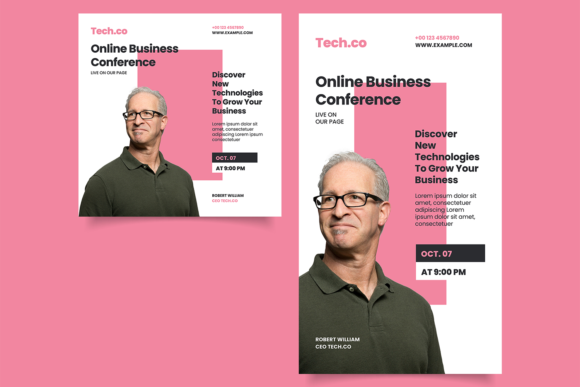
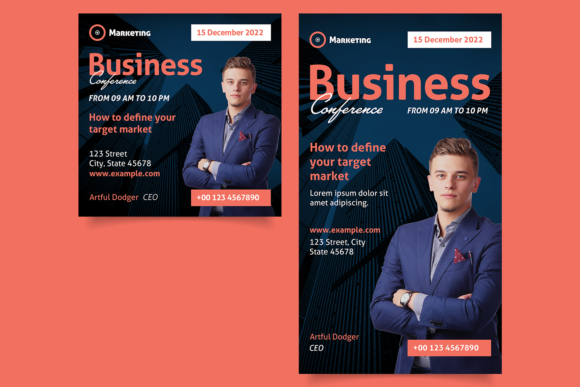
Business conferences are pivotal events for networking, knowledge sharing, and brand visibility. To maximize the impact of these events, organizations often turn to social media posts designed specifically for platforms like Instagram and Facebook. These posts, typically created using templates such as the Business Conference Social Media Post Layout with Pink Accents PSD files, offer a structured and visually appealing way to promote events and engage audiences.
The Business Conference Social Media Post is a digital content template that includes pre-designed layouts optimized for popular social media platforms. These templates are usually available in multiple formats, such as 1080×1080 pixels for square posts and 1080×1920 pixels for vertical stories. They often feature pink accents, which can add a modern and eye-catching appeal to the design.
Why Someone Might Be Interested in Business Conference Social Media Post
Individuals or businesses interested in promoting their participation in a conference may find these templates valuable. Whether it's for announcing event details, sharing speaker highlights, or generating excitement around the event, a well-designed social media post can significantly enhance visibility and engagement.
For professionals who are not designers, these templates provide an accessible way to create high-quality content without requiring advanced graphic design skills. The availability of RGB colors and fully editable layers ensures flexibility in customization, allowing users to align the design with their brand identity or event theme.
Additionally, the use of a 150 DPI resolution ensures that the final output maintains clarity and quality, even when shared across different platforms. This makes the templates ideal for both online and print use, depending on the event’s needs.
Benefits and Considerations of Using Business Conference Social Media Post
One of the primary benefits of using a Business Conference Social Media Post is the time and effort saved in content creation. Instead of starting from scratch, users can leverage a professionally designed layout, ensuring consistency and visual appeal. This is especially useful for teams with limited design resources or tight deadlines.
Another advantage is the ability to maintain brand coherence. With customizable color schemes and layered designs, users can easily adapt the template to match their company’s branding guidelines. This helps reinforce brand recognition and creates a more professional appearance.
However, there are tradeoffs to consider. While templates offer convenience, they may lack the uniqueness of custom-designed content. For organizations that prioritize distinctiveness, this could be a limitation. Additionally, users must ensure they have the necessary software to edit the PSD files, which may require additional investment in design tools.
It's also important to evaluate whether the specific features of the template align with the event’s goals. For instance, if the conference has a strong focus on networking, the template should support content that encourages interaction, such as call-to-action buttons or event countdowns.
Situations Where Business Conference Social Media Post Is a Strong Fit
The Business Conference Social Media Post is particularly effective in scenarios where speed and consistency are priorities. For example, marketing teams organizing large-scale events may benefit from using these templates to streamline their social media strategy. The pre-designed layouts allow for quick updates and consistent messaging across multiple platforms.
Events that target a younger or more visually-oriented audience may also find these templates beneficial. The use of pink accents and modern design elements can resonate well with demographics that value aesthetics and style. This makes the templates suitable for tech, fashion, or lifestyle-related conferences.
Moreover, for businesses looking to increase their online presence through regular social media activity, these templates can serve as a reliable resource. By reusing or slightly modifying existing designs, teams can maintain a cohesive visual identity while keeping content fresh and engaging.
Situations Where Alternatives May Be Worth Considering
In some cases, alternatives to the Business Conference Social Media Post may be more appropriate. For instance, if the event has a highly specific or niche audience, a custom design might better reflect the unique tone and message of the conference. Custom graphics can help differentiate the event from others and create a more memorable impression.
Organizations with in-house design teams may prefer to create their own content to ensure complete control over the creative process. This approach allows for greater flexibility and alignment with broader marketing strategies. However, it requires time, skill, and resources that may not be available to all users.
Additionally, for events that rely heavily on text-based communication, such as academic or industry-specific conferences, a more minimalistic or information-focused design may be more effective than a highly stylized template. In such cases, simplicity and clarity should take precedence over visual flair.
Practical Decision-Making Insights
When deciding whether to use a Business Conference Social Media Post, it's essential to assess your specific needs and constraints. Start by defining the purpose of your social media content. Are you aiming to generate attendance, share key insights, or build brand awareness? Each goal may influence the type of design and content you need.
Consider the resources available to your team. If design expertise is limited, a pre-made template can be a practical solution. However, if you have the capacity to invest in custom work, that may provide a more tailored outcome.
Also, think about the long-term implications. Will the template support future events, or will you need to start over each time? Some templates may offer scalability, making them a cost-effective choice for recurring events or ongoing marketing efforts.
Finally, test different approaches. Experiment with the template to see how it performs in real-world scenarios. Monitor engagement metrics and gather feedback to determine whether it meets your expectations. This data-driven approach can help refine your strategy and improve future content efforts.